
Independent Project
To be loved is to be changed is a photo essay focused on engaging Canadians to admire the different ways abandoned structures are preserved and showcasing Canadian heritage through the physical culture of immigration and historical architecture.
Abandoned structures are commonly at risk of demolition and stigmatization, but also carry so much history within them. To be loved is to be changed is a publication designed to share stories of Canadian history with the general Canadian public through the means of photography and perspective-sharing through quotes and poems.

The front cover of the book shows how loving something so much can ultimately change its outcome over time. The image shows the Crazy Creek Falls saw mill, a building that was used extensively and did much work; after its abandonment, pieces were relocated, and the channels of nature began to take over. This building is highlighted in its current state with trail markers along the short hike to the structure. Even though the structure has changed so much, the love for the building is still reflected in the storytelling and trail markers that guide visitors to it.
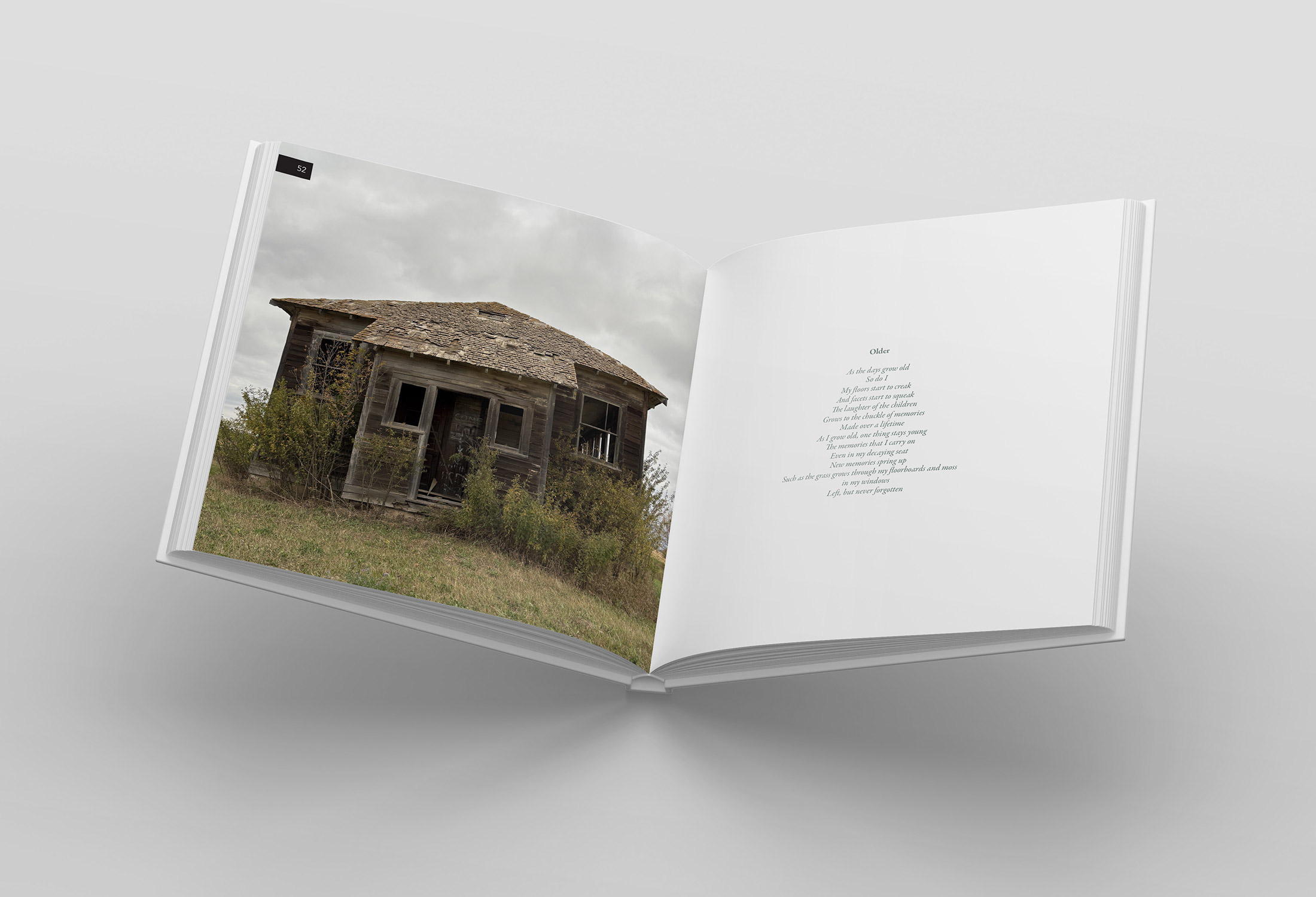
One of the many spreads seen throughout the book, this spread takes a strong image and pairs it with a quote constructed from the perspectives and stories collected in DESN 410 as a part of the research process. The poem highlights the structure and how it changes over time because it is so loved in the household. The spread takes strong imagery and pairs it with strong information to create an immersive experience that anyone can feel connected to. All of the text in the book is also a soft grey to gently guide the reader through the book and leave the most impact to the imagery.
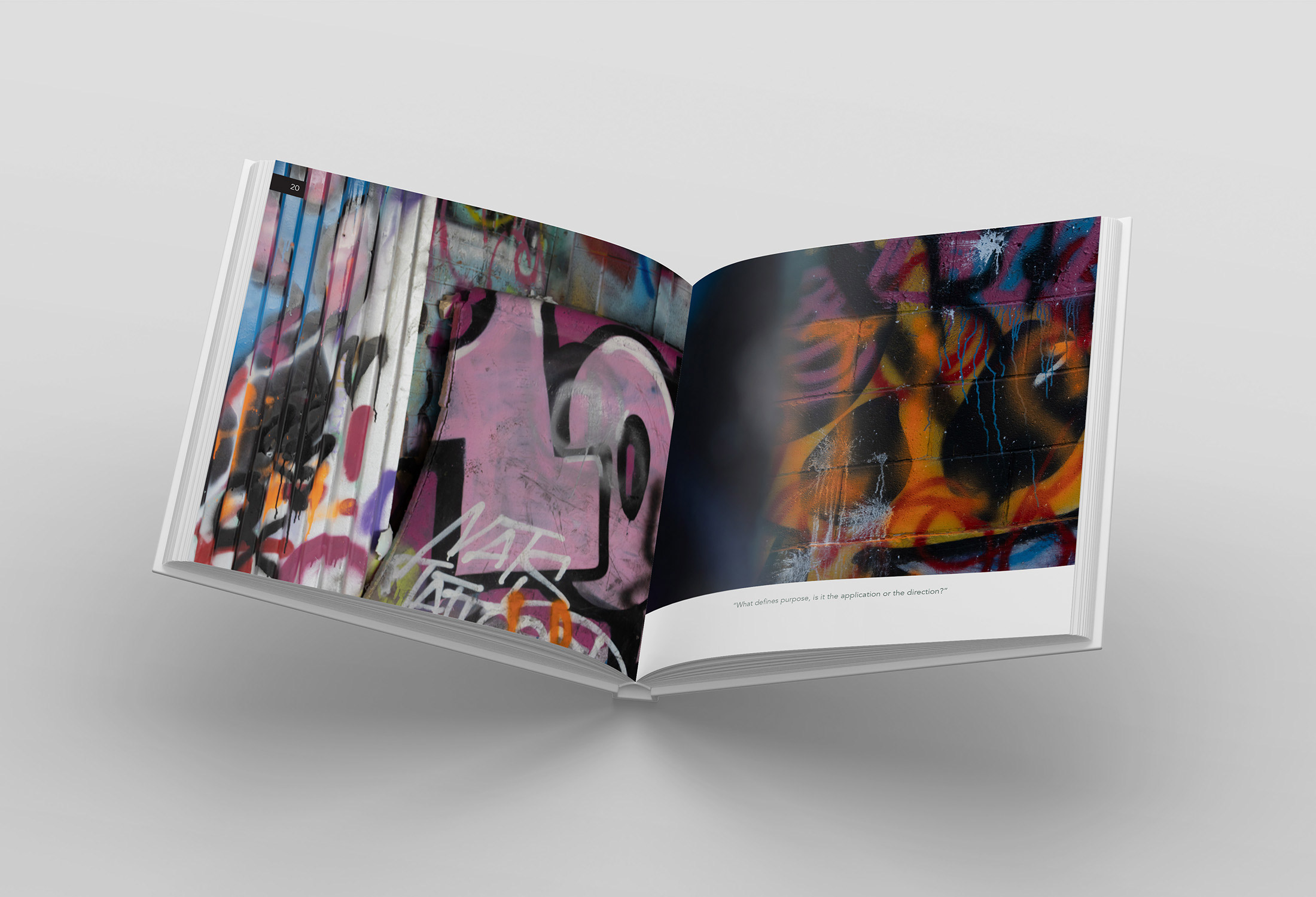
Showcasing another one of the refinements, the images used in the spread pair are well paired to create a soft, immersive feeling in the book. The large scale of the images allows the reader to see all the details. The images themselves show that, even as a structure is abandoned, a new purpose can be found. This concept is important to remember as the reader goes through the book, as structures serve as a historical time capsule that educates us about past architecture, storytelling, and ways of life.
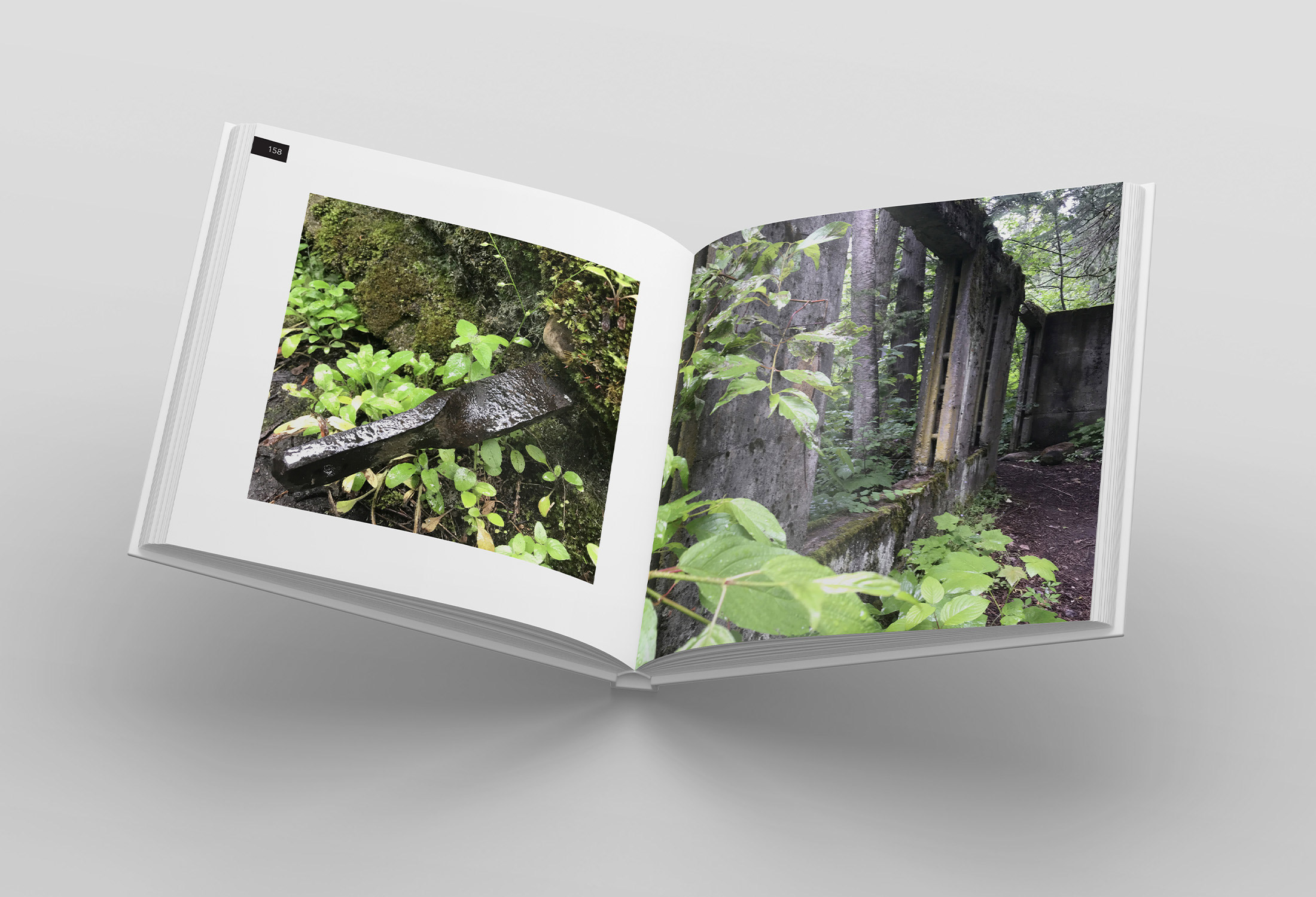
One of the final spreads developed in the series, this spread shows images that highlight the regrowth and reclaiming of nature as these structures sit dormant. The importance of stepping back and watching how the natural process can reset time, while still keeping stories of history alive. Nature is one of the most interesting storytellers as it explains things that we can only understand by seeing, waiting, and restoring.

This spread layout showcases how the book's history and stories are presented. The pages feature a single black-and-white image, taken from the section, converted to greyscale with a soft colour overlay. Each of the ten sections in the book has its own colour title page, with the colours drawn from the images in that section. The title spreads allow the more serious historical information to have a well-designed place to convey meaning. They also allow for a clear break within the county or region to better understand the tone and history.