
Independent Project
Those affected by the dehumanization of women want to know they are not isolated in their experiences. The harmful behaviour that may manifest when individuals encounter accounts of objectification in their everyday media consumption. The design of a magazine reclaims a media space that has historically been weaponized against women, shedding light on the experiences of women to confront the normalization of objectifying women culturally.
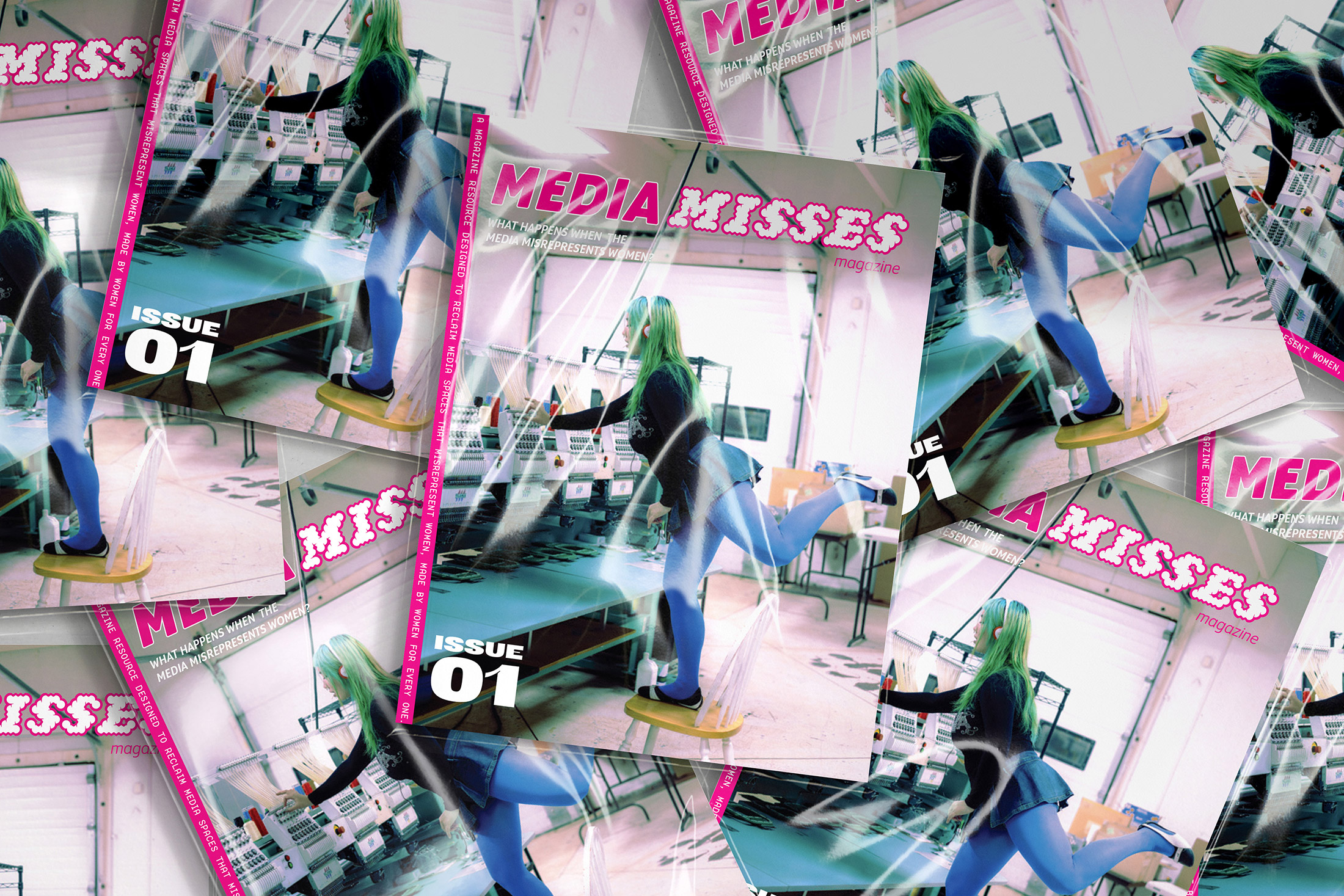
The cover of the final magazine for Media Misses. This cover's main photograph captures how it feels to constantly perform for the male gaze. As a femme-presenting person, you must always look good and effortless, a sentiment shared by the majority of contributors to the magazine's research and content. The graphic design is reminiscent of early 2000s styles, a time when the target audience could recall their first encounter with the objectification of women in everyday media consumption.
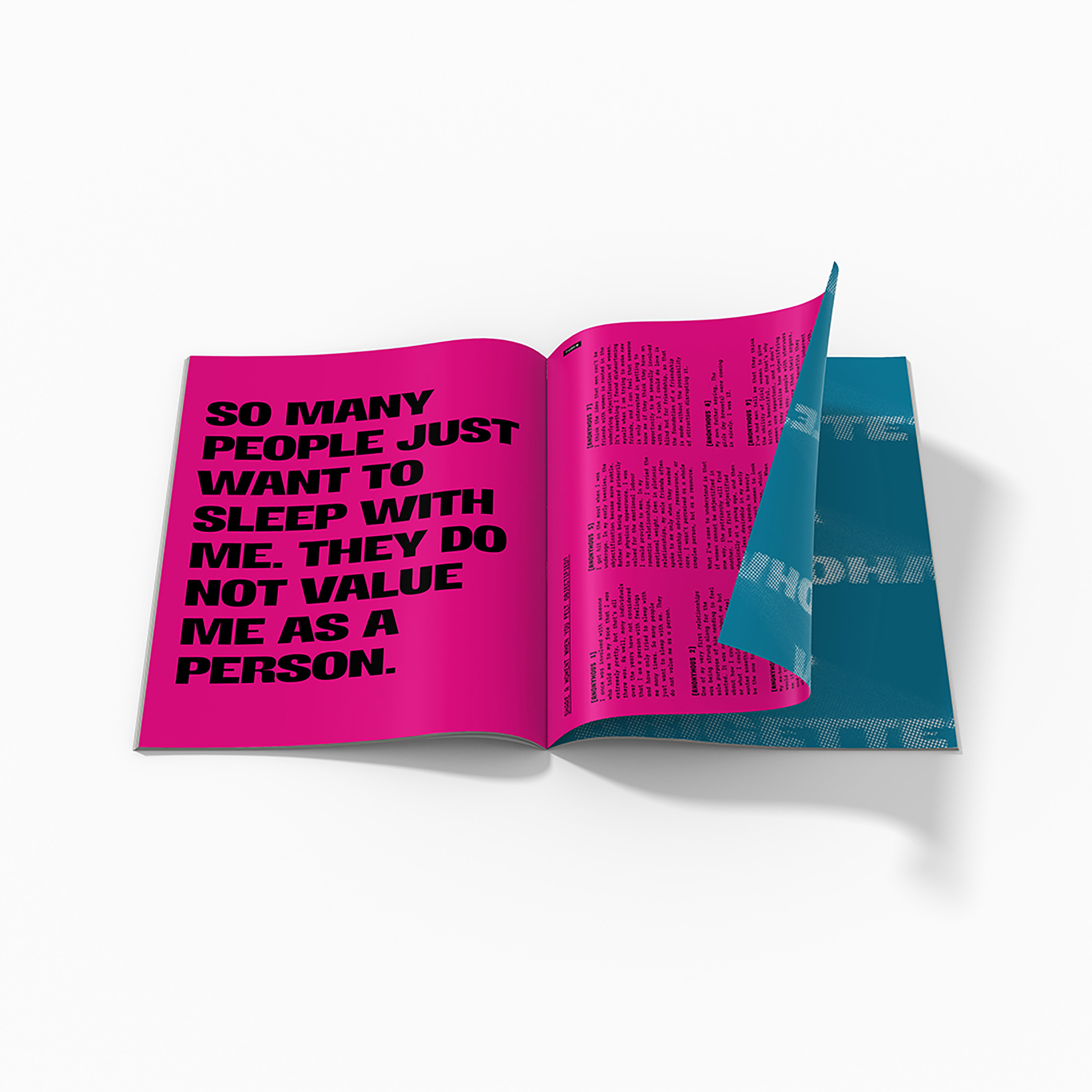
This spread features a forum of responses from anonymous contributors, stylized as a digital forum. Not all contributors to the magazine wanted to put their faces or names forward; their words are extremely impactful and deserve to be heard. In their anonymity, their vulnerability increases. This is present in the pull-quotes and in their responses to the posed question in each themed spread. This one, in particular, asks you to name a moment when you felt objectified.
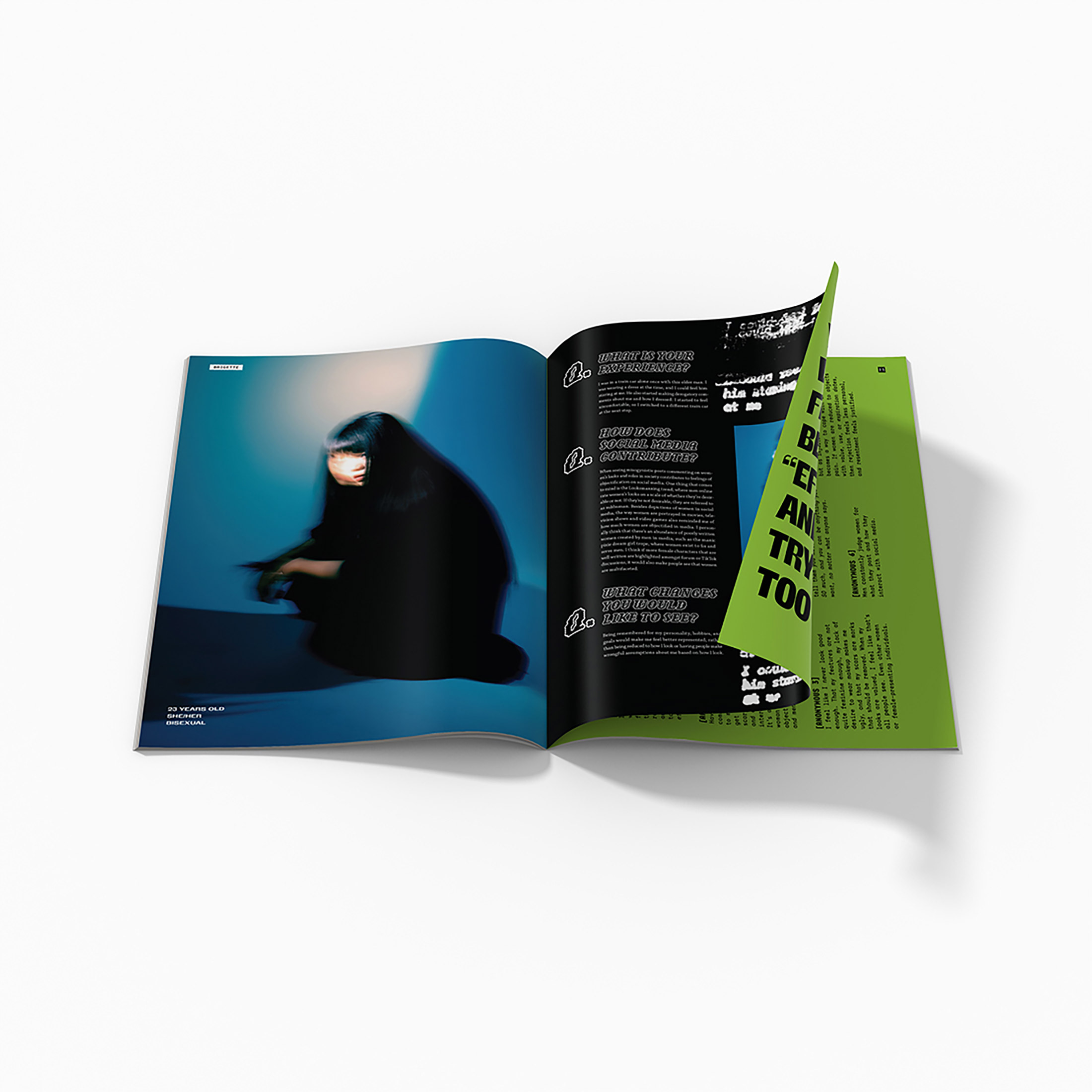
This spread features one of the contributors who was willing to put their face, name, and story forward for the magazine. Out of five people, I’m immensely grateful for their contributions and vulnerability. Each contributor, in this sense, answered a series of questions to form the copy of their spreads. As well as engaged in a themed photoshoot based on their responses. Reclaiming how photography manipulates women and how the medium is taken as a truth-teller, we devised this to show real women and artistically represent their feelings about objectification.
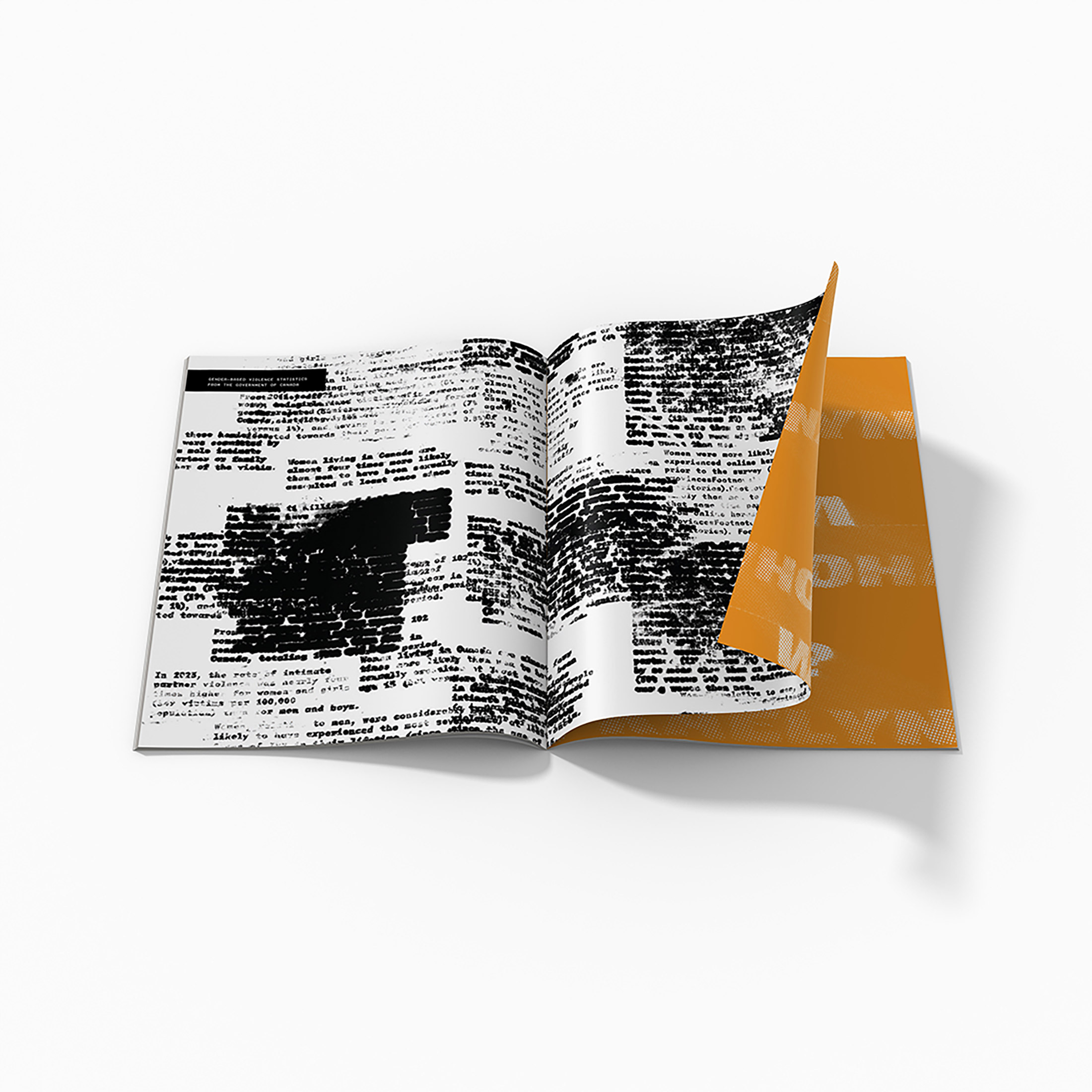
The centrefold subverts expectations of a magazine centrefold, which commonly, in magazines that objectify women, sexualize women and instill sexist beauty standards. The centrefold in the magazine shows how, from research, misogynistic behaviours can manifest into dire consequences for women, including gender-based violence. The statistics are pulled from the government of Canada. Yet, the visual style and expressive typography and is a timely reference to the Epstein Files, in which accounts were redacted, erasing accountability for violence against women.
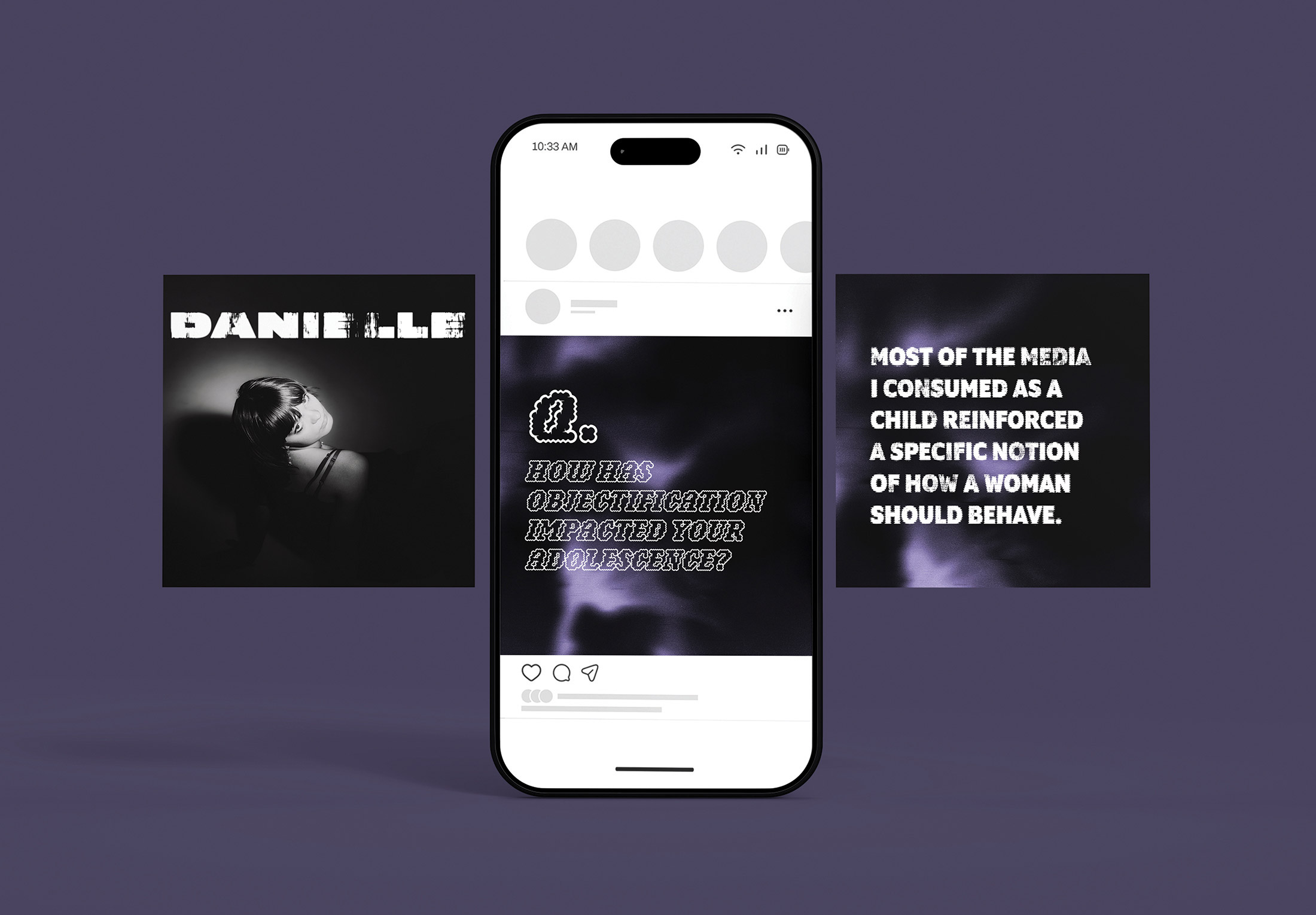
A magazine is not the only channel of media influences that impacts women; in fact, social media was a primary platform on which women felt objectified. Drawing on the magazine's visual style and the established visual identity, I created a social media extension on Instagram to share stories from the magazine and, in the future, more. This also provides an accessible option for those who are unable to get a physical copy of the magazine.